Pastis je t'adore
Pastis insists you slow down. You can't gulp it, you can't rush the ritual, and you can't quite replicate it anywhere that isn't warm and unhurried. Which is exactly the point.

Wransley's was the sort of old-school newsagents where you could still buy penny sweets — not quite from glass jars, nothing so twee as that, but from open plastic bins on a shelf opposite the counter.
On Saturdays I would walk the half-hour round trip there and back to spend my pocket money. I still remember filling the small white paper bag each week. It started off smooth and stiff then slowly softened and rumpled over the rest of the morning as I dipped into it for treats.
I remember the aniseed balls best of all. I never bought too many — I didn't want to spoil my enjoyment. The immediate pleasure of fizzy cola bottles was showy but no match for the deep joy of a well-sucked aniseed ball with its slow reveal, layer after intense layer, leading to that tiny black kernel of anise almost too challenging but all the better for it. I saved them for last because they would perfume the bag itself — you could smell them even after they were gone.
Perhaps that's where my appreciation for pastis began, decades before I knew what it was.
Tasting notes
I wrote these notes on holiday last summer in Villetritouls, France.
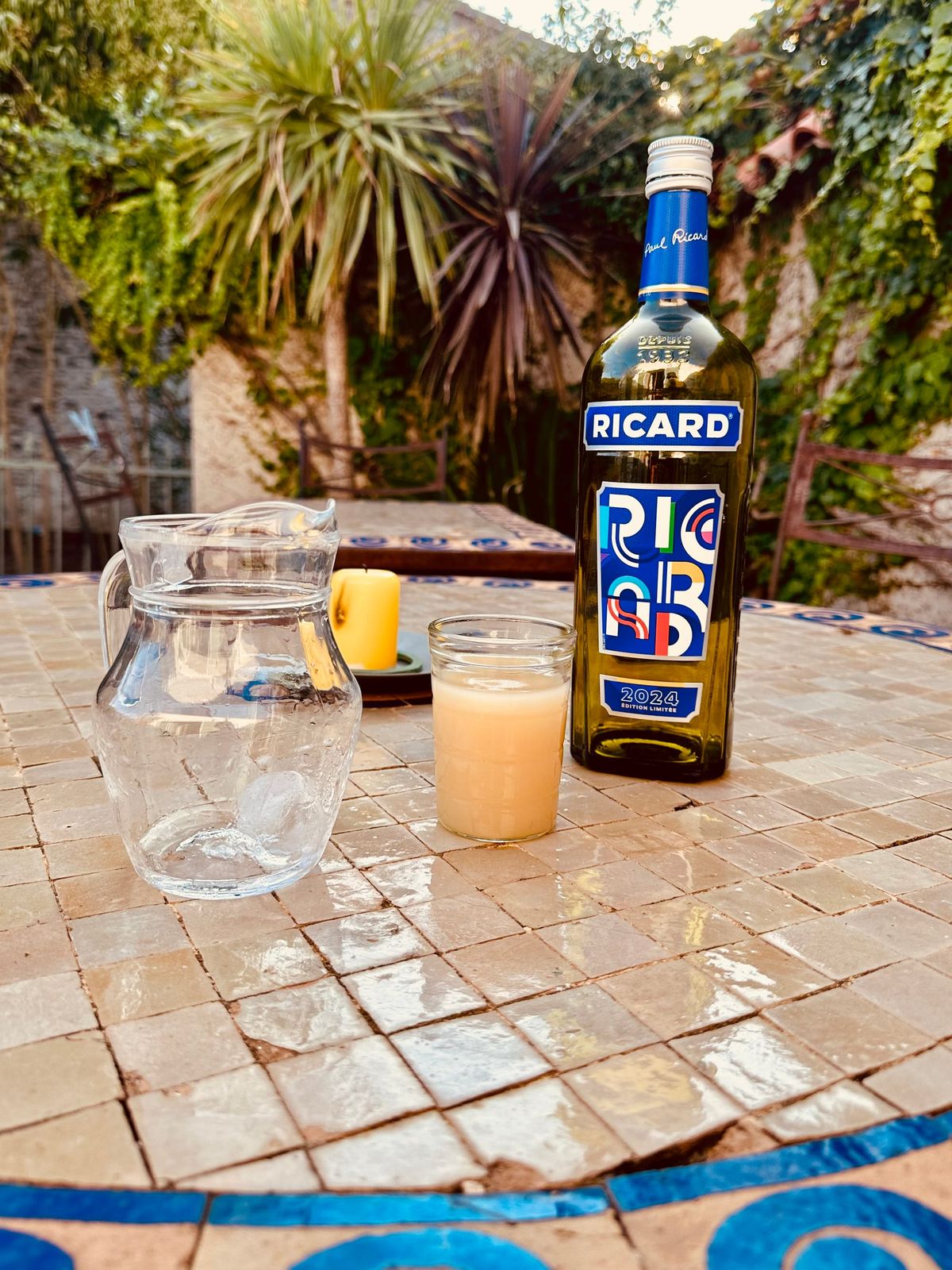
25ºC, sunny and windy. Drinking Pastis Ricard alone in a sunny courtyard.
Listening to cicadas. Voices of family by the pool. Marking the turn from day into evening. Rich anise, liquorice, maybe mint and fennel sweetness. A slight tongue-tingling property. Deeply refreshing. Strong but soft and silky.
One to linger over. Take your time. Life at a slower pace beneath the Mediterranean sun. Unhurried. It's a deep yellow/brown sort of feuille morte but appetising and crystal clear. Then with water instantly a milky pale yellow, opaque. An excellent sundowner. Perhaps the best.
Also a heavily context-reliant drink. If someone isn't playing pétanque beneath the pines within 10 km then it just doesn't taste the same. It's the quality of the light, the heat, the smell of the garrigue on the breeze. Even the need for citronella against the bugs plays into its charm.
That slightly pepper/spice snap you get at the very centre of an aniseed ball.
The real thing
The link between pastis and leisure is strong in France. In cafés your pastis comes with a carafe of cool water. The received wisdom says to dilute your drink with five parts water to one part pastis, but that’s just a starting point. You’re also supposed to keep on topping it up with more water. Not only does this stop you from getting too sozzled, but it also means you can nurse your drink (and keep your seat) for longer.
Pastis is a cultural phenomenon that runs deep. When the French banned absinthe in 1915, distillers had to innovate. Paul Ricard created his pastis in 1932, marketing it as "Le vrai pastis de Marseille" — the real pastis of Marseille. By 1936, when the French were granted paid vacations, many headed south. They developed a taste for pastis and brought that spirit back home.
As other regional aperitifs fells out of favour, pastis became trendy throughout the rest of l’hexagon (as the French like to call mainland France). The drink's popularity wasn't just about taste, it was about capturing and extending that feeling of southern leisure.
Perfecting pastis
Back in London, there's one place that truly gets it: The French House in Soho sells more Ricard than anywhere else in the UK. But for home drinking, you have options beyond the ubiquitous Pernod on pub shelves.
Ricard remains the classic — Paul Ricard's original 1932 recipe unchanged, with star anise, fennel, liquorice, and Provençal aromatics.
Pastis 51 was created in 1951 when the ban on anise aperitifs lifted. Made in Marseille with Chinese star anise, Provençal plants, fennel, oriental liquorice, and African kola nut.
Henri Bardouin offers a more complex, artisanal expression if you want to explore beyond the mass market.
The usual advice is to mix one part pastis to five parts cold water, though you can adjust to taste and I do so liberally myself, being more of a 1:2.5 kinda guy. Watch the magical transformation as the clear spirit turns cloudy white — the louche. Traditionalists serve it with ice on the side, never in the glass.
What I’ve yet to try myself are the classic Provençal variations: add two teaspoons of grenadine for a Tomate or orgeat (almond syrup) for a Mauresque (Moorish). Mint, strawberry and lemon syrups also work well apparently. Maybe I’ ll give them a go one day. But maybe I won’t. I’ve never yet found unadulterated pastis to be anything other than delicious.
The art of slowing down
Perhaps what we really import when we drink pastis isn't just the anise and fennel, nor the memories of sunny holidays, but the French understanding that some pleasures can't be rushed.
Pastis insists you take your time. You can't gulp it. The ritual of preparation — the measuring, the water, watching the louche develop — forces a pause.
It's the antithesis of a lager knocked back in the shadeless beer garden. Pastis demands a chair, a table, time to talk or think. Maybe that's why it tastes different when you're rushing.
Bonus French lesson
A quick French vocab note: the name pastis comes from a Provençal term pastisson, meaning a mixture or a combination of things — pastis borrowed from the term as it's a mixture of herbs and botanicals. There's a French phrase — être dans un pastis — for being in a mess or a muddle. Apparently it predates the drink and comes from the older pastisson root. But if you do neck your Ricard too fast, and in the full midday sun, then perhaps you will bring the two back together again and find yourself in un vrai pastis, grâce au pastis.